Spacery is open sourcing its tools for building digital twins
We want anyone to be able to capture a place, turn it into a space on the web and keep it for decades, on our hosting or on their own.
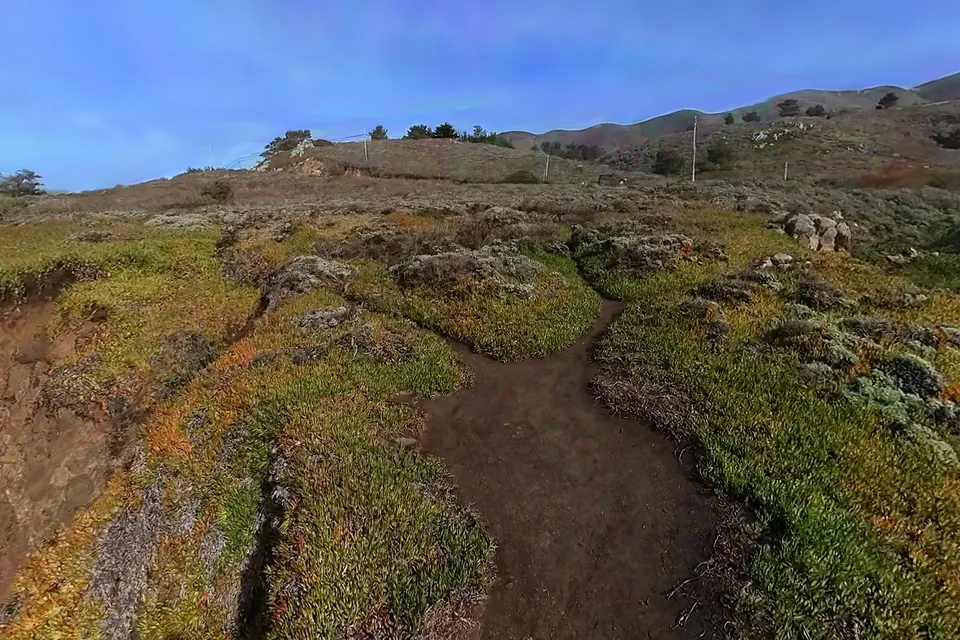 Gaussian splatBig Sur Coast, California
Why open source
A capture of a place should outlive any one company, ours included.
People scan the places that matter to them. Museums record galleries before they change, archaeologists document sites that are wearing away, builders capture rooms before the walls close up, and families keep a record of a home. Those captures are only worth something if they still open years from now.
Many hosted tours live inside one company's viewer and stop opening when the subscription ends. Spacery is built the other way around. The tools that build each space are open source under the MIT license, and every space is made of ordinary files that other software can read.
The same spaces are a starting point for simulation. A measured model in GLB or a Gaussian splat can be loaded into game engines and robotics simulators, which is one more reason to keep the files open.
What is open source
The viewer and the tools that build spaces are on GitHub.
SPHR is the viewer and toolkit behind Spacery. It renders Gaussian splats, 360 panoramas, measured models and guided tours in the browser with Three.js. It also holds the importers for E57 scans, Insta360 footage, splat files, point clouds and 3D models, the sandboxed worker that runs our processing agents and the skills those agents follow.
The Spacery connector is a Model Context Protocol server that lets your own agent publish captures and build tours. It is listed in the official MCP Registry.
Both are released under the MIT license. Run them on your own computer, change them, or host spaces on your own domain with the self hosting guide.
Open to everyone
A space should open on whatever device a visitor already has.
Spaces run in an ordinary web browser on a phone, a laptop or a school computer, with nothing to install. Visitors walk by tapping or clicking where they want to go, or with the arrow keys.
The software is free to use, so a school, a small museum or a single researcher can run it themselves. Hosting on Spacery pays for the development of the open source tools.
Built to last
Every space is a small set of standard files.
Panoramas are JPEG images, measured surfaces are GLB models, splats stay in Gaussian splat formats such as PLY and SPZ, and one JSON file describes how they fit together. The viewer that plays them is open source, so a space does not depend on any one company staying in business.
Keep your original capture files as well. An E57 scan, a folder of 360 photos or a trained splat can be built into a space again at any time, by Spacery or by the open source tools on your own machine.
See every kind of capture Spacery accepts, or move your spaces from Matterport.
Get in touch
Questions about a capture or a project go to [email protected].